Loading...
Serving Lake Charles, LA and surrounding areas. (337) 549-5482
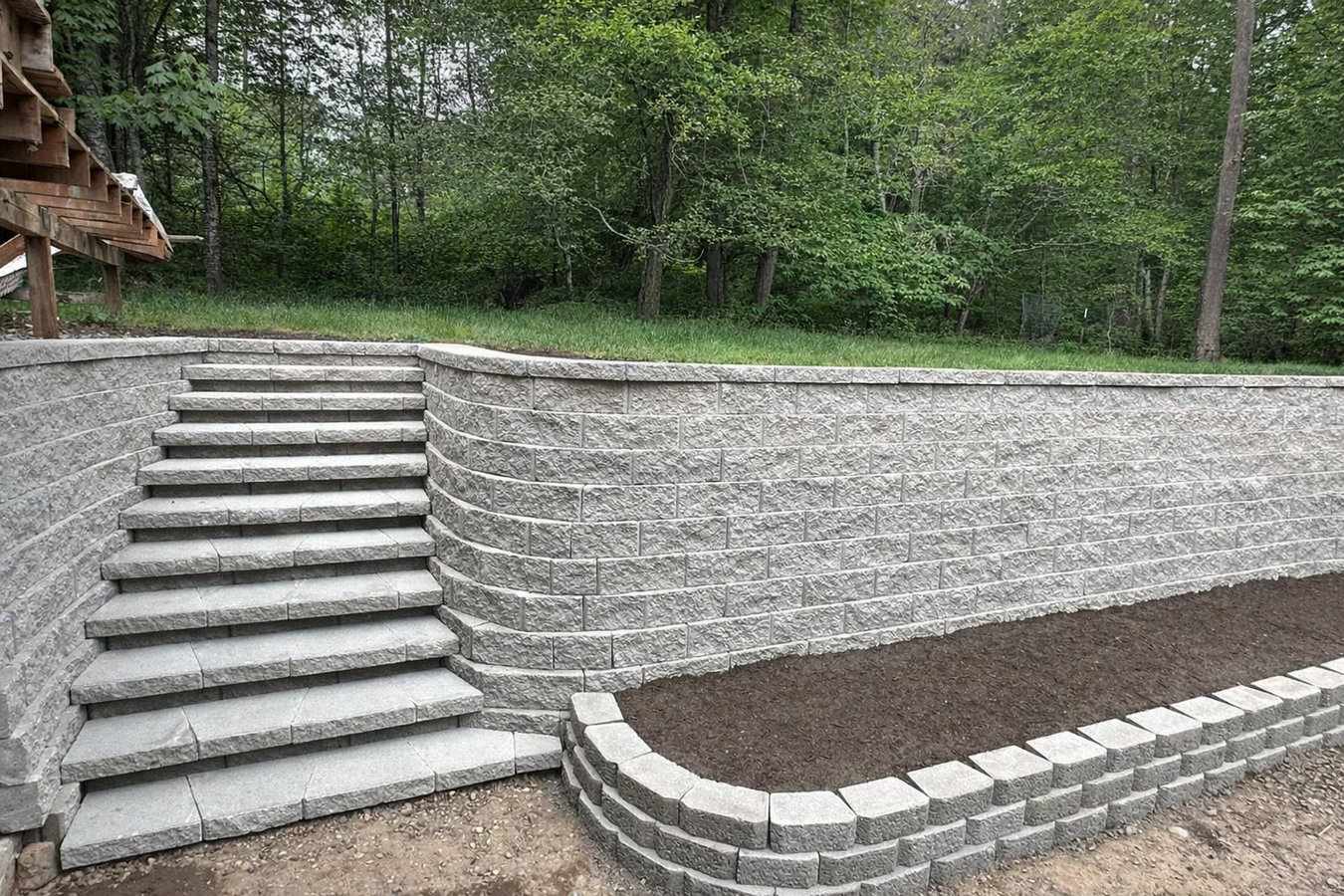
Washing soil, a leaning yard, or water pooling after every storm - a properly built retaining wall stops the damage and puts your outdoor space back in your control.
Retaining wall construction in Lake Charles means building a barrier - from concrete block, poured concrete, natural stone, or brick - that holds back soil on a slope or grade change, with drainage designed to handle the area's heavy rainfall. Most residential walls up to four feet tall take two to four days from excavation through cleanup.
A retaining wall does two things at once: it holds soil in place and it manages the water behind it. In Lake Charles, where the water table is often close to the surface and storm rainfall can be intense, the drainage side of this equation is just as important as the wall itself. A wall without proper gravel backfill and drainage outlets will fail - not immediately, but within a few years as water pressure builds up behind it. That is why anyone quoting a retaining wall here should be talking about drainage from the first conversation.
When a wall is part of a larger hardscape project, related work often follows naturally. If you are also considering a new driveway nearby, combining that scope with masonry restoration or structural wall work keeps the project coordinated and the site disruption to one window.
If bare patches appear after heavy rain or soil piles up at the base of a slope, that is active erosion. Lake Charles gets intense rainfall, and without something holding that soil in place, the problem gets worse with every storm. A retaining wall stops the cycle before it reaches your foundation or a neighbor's yard.
In Lake Charles, the combination of clay soil and a high water table means water lingers. If a sloped area stays wet long after the rain stops, that saturated soil is heavier than normal and more likely to shift. A retaining wall with drainage built in can redirect that water and stabilize the ground.
If an older retaining wall is starting to tilt forward or shows cracks running through it, that is a sign it is losing the battle against soil pressure. This does not always mean the whole wall needs to come down, but it needs a professional assessment before it fails completely - a collapsed wall can damage landscaping, fencing, or a driveway.
If standing water collects near your house after heavy rain and your yard slopes toward your home rather than away from it, a retaining wall combined with regrading can redirect that water. In a city that sees the rainfall Lake Charles does, water against a foundation is a slow-moving problem that gets expensive when ignored.
We build retaining walls in concrete block, poured concrete, and natural stone, sized from small garden beds to full structural walls designed to hold back significant soil volume. Every project starts with a site assessment that looks at the slope, soil conditions, drainage patterns, and what is directly uphill from the wall - because all of those factors affect how the wall needs to be built and how deep the base must go. For structural walls handling significant soil loads, concrete block walls are often the most practical and durable choice in this climate.
We also handle existing wall assessment and repair. If an older wall has started to lean or crack, we can evaluate whether reinforcement is possible or whether a rebuild makes more sense for the long term. For homeowners whose properties have shown storm-related erosion since 2020, we assess the full drainage picture before recommending a scope, because a retaining wall that does not account for the actual water movement on your property is solving only part of the problem. Complex erosion situations sometimes also benefit from masonry restoration on adjacent structures at the same time.
The most common choice for residential projects in Lake Charles - durable, cost-effective, and well-suited to clay soil conditions when built with proper drainage.
A good fit for homeowners who want a more natural appearance in the yard, particularly for shorter walls and garden terracing.
Best for larger structural walls that need to handle significant soil pressure, or for integration with existing concrete work on the property.
For homeowners with an older wall that is leaning or cracking - a professional assessment determines whether repair or replacement is the right call.
Lake Charles sits on clay-heavy soil that swells when wet and shrinks when dry. That constant movement puts ongoing stress on retaining walls - more so than in areas with sandier or more stable ground. The city also sits near sea level, with a water table that is often close to the surface. After heavy rain, water does not drain away quickly, which means the soil behind a retaining wall can stay saturated for days. A wall built without accounting for that sustained water pressure will start showing problems faster than the homeowner expects. The Mason Contractors Association of America provides training standards that help masons understand how to build for specific soil and drainage conditions - the kind of knowledge that matters when the local soil behaves the way ours does.
We work throughout the region, including Westlake and Sulphur, where many of the same drainage challenges appear. Since Hurricanes Laura and Delta in 2020, a number of homeowners across Calcasieu Parish have dealt with new erosion and drainage problems that were not there before the storms. We have worked on many of those properties and understand how the landscape changed after that event.
We respond within 1 business day. We ask basic questions about where the wall needs to go, how tall it needs to be, and what you have noticed - erosion, water pooling, or a leaning existing wall. Most retaining wall jobs in Lake Charles require an in-person visit because soil and drainage conditions vary so much from yard to yard.
We walk the property, look at the slope, check for drainage issues, and measure the area. We also note any underground utilities, tree roots, or drainage easements that affect how the job gets done. You receive a written estimate that breaks down materials, labor, and permit costs - no vague ballpark numbers.
If your wall requires a city permit - common for taller walls or walls near property lines in Lake Charles - we submit the paperwork on your behalf. Permitting can take a few days to a couple of weeks depending on current city workload. We coordinate the inspection once the work is complete.
The crew excavates, compacts the base, builds the wall course by course, and installs drainage outlets as they go. Before leaving, we walk the finished wall with you and explain what normal settling looks like versus something worth calling about.
Written estimate, no obligation. We respond within 1 business day and handle permits for you.
(337) 549-5482Every wall we build includes gravel backfill and drainage outlets sized for the soil conditions and water volume on your property. A wall without proper drainage fails faster than one that accounts for the high water table and 57 inches of annual rainfall Lake Charles receives.
Navigating the City of Lake Charles permitting office is not something most homeowners want to do. We file the paperwork, schedule the inspection, and coordinate the city sign-off from start to finish. You do not need to take time off work to meet an inspector.
Louisiana requires contractors to hold a state-issued license for this type of work. You can look up any contractor on the Louisiana State Licensing Board for Contractors website before signing anything. We carry all required insurance coverage and provide documentation on request.
We have worked on properties across southwest Louisiana through the 2020 hurricane season and the rebuilding that followed. That gives us direct experience with how the landscape and drainage patterns changed after Laura and Delta - context that matters when assessing a wall project on a property with storm history.
Getting a retaining wall built correctly the first time in Lake Charles means accounting for the soil, the water, and the permit process together. That is what we do on every project.
If an existing retaining wall is cracking or deteriorating, masonry restoration can stabilize it without a full rebuild.
Learn MoreConcrete block is one of the most durable and cost-effective materials for retaining walls and structural dividers throughout southwest Louisiana.
Learn MoreContractor schedules fill up quickly after storm season - reach out now so we can get your project on the calendar.