Loading...
Serving Lake Charles, LA and surrounding areas. (337) 549-5482
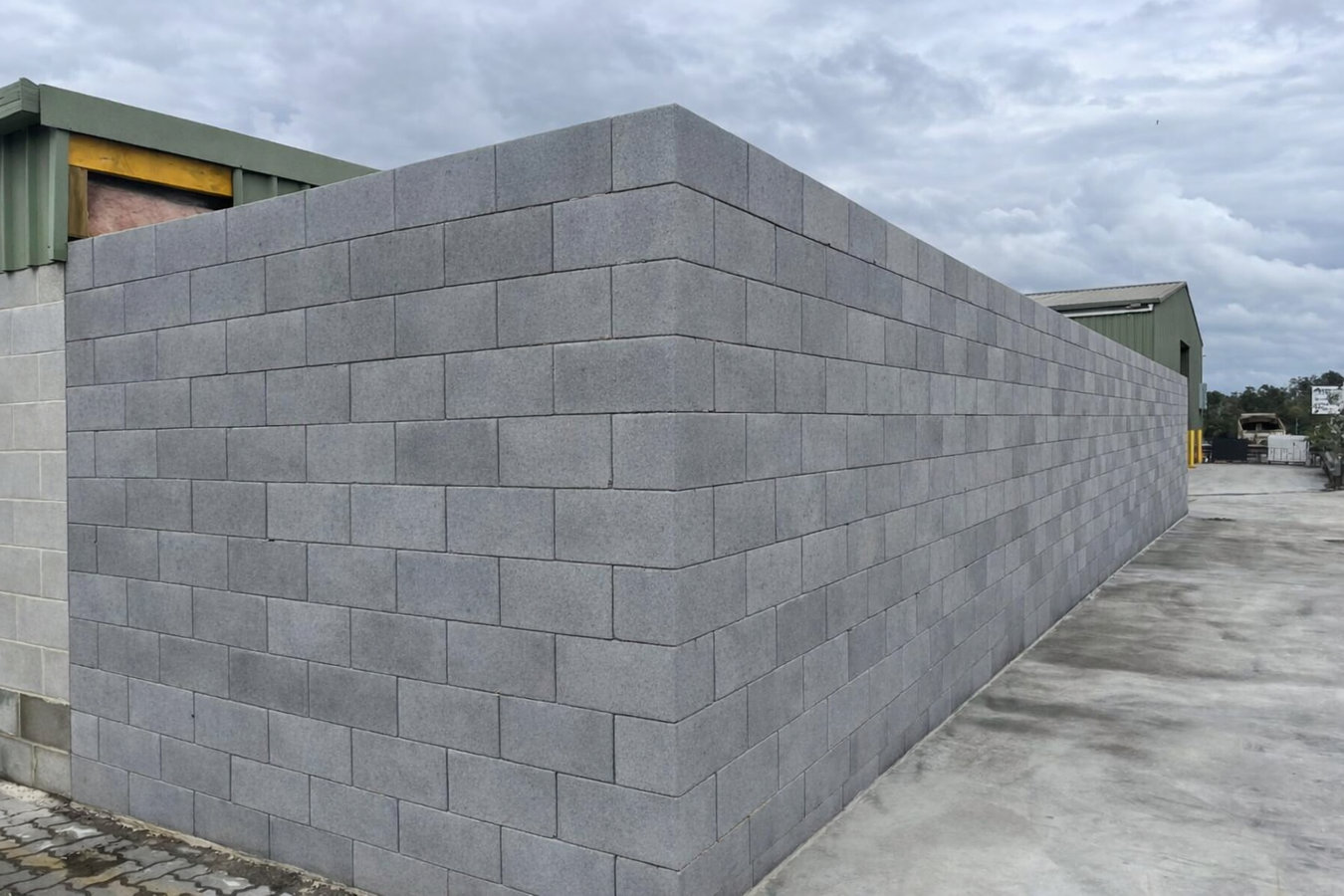
Wood fences blow over. Vinyl fades and warps. A properly built concrete block wall handles Lake Charles storms, holds back shifting soil, and lasts for decades without replacement.
Concrete block walls in Lake Charles are stacked masonry structures built from cement, sand, and aggregate blocks set in mortar, with hollow cores often reinforced by steel rods and concrete fill. Most residential privacy and retaining walls take two to four days of active work, though the full project timeline from first call to finished wall typically runs three to six weeks when permits and curing time are factored in.
In Lake Charles, a concrete block wall is not just a boundary marker - it is often the practical solution to real problems. The clay-heavy soil expands and contracts with every rain cycle, which causes lighter fence systems to shift and fail over time. After the 2020 hurricane seasons, many homeowners who replaced blown-down wood fences with concrete block walls found they had solved the problem permanently rather than just for another few years. The National Concrete Masonry Association sets the industry standards for how these walls should be built - and those standards exist because the details matter for longevity.
If your project involves holding back a slope or managing drainage on your property, concrete block walls and retaining wall construction often overlap - we can help you determine which approach fits your yard.
If you notice bare patches, exposed roots, or mulch that keeps washing onto your driveway or sidewalk after heavy rain - which happens often in Lake Charles - a retaining wall is likely the right fix. A concrete block wall holds that slope in place permanently and stops the erosion cycle.
Visible cracks running through mortar joints, blocks shifted out of alignment, or a wall that leans when you look down its length are signs it is failing. In Lake Charles, this often happens because the original footing was too shallow for the clay soil, or because water built up behind a retaining wall with nowhere to drain. A leaning wall does not fix itself.
Wood fences in Lake Charles take a beating from hurricanes and high humidity - they rot, warp, and blow down. If you have replaced the same fence section more than once, a concrete block wall is worth considering. It will not blow over in a storm, will not rot, and will not need painting every few years.
Standing water near your foundation after rain, or ground that slopes toward your house rather than away from it, is a serious long-term risk. In Lake Charles, where heavy rain events are frequent and the soil drains slowly, water sitting against a foundation leads to cracking and moisture intrusion over time. A block wall or border can redirect that water before it causes structural damage.
We handle concrete block wall projects from footing excavation through final inspection, including permit applications for projects that require city or parish review. Every wall we build starts with a proper concrete footing - sized for the specific soil conditions on your property. Lake Charles clay soil demands more depth than national minimums suggest, and we do not cut corners on that step. Homeowners building walls that need to hold back soil should also consider how the project connects to broader grading or drainage work. When a wall is part of a larger retaining strategy, retaining wall construction with engineered drainage is the more comprehensive solution.
For homeowners building a detached garage, outbuilding, or workshop, concrete block is a practical choice for the walls in this climate - it handles humidity better than wood framing in many applications and is far more resistant to the wind and flood conditions Lake Charles homeowners deal with regularly. That work connects directly to foundation block wall installation, which we also provide for projects where the block wall serves as the structural base.
Ideal for homeowners replacing blown-down or deteriorated fencing with a permanent, storm-resistant masonry boundary along property lines.
Best for yards with slopes, erosion problems, or landscaping features that need a solid structural edge to stay in place through rain seasons.
Suited to homeowners building a detached structure where block construction offers better humidity and wind resistance than wood framing.
For any wall in a location exposed to sustained wind or storm surge risk - steel rod and concrete fill reinforcement is standard on all walls taller than a couple of feet.
Lake Charles sits on soft, clay-heavy soil that swells when wet and shrinks when dry. That constant movement puts stress on any wall that does not have a footing deep enough to stay below the active soil layer. A footing depth that passes inspection in a sandier region can fail here within a few years as the clay cycles through wet and dry seasons. A good contractor will assess your soil on-site and size the footing for the conditions on your specific lot - not just apply a national rule of thumb. The City of Lake Charles also has floodplain management rules that affect construction near drainage channels and low-lying areas, so it is worth confirming your property's flood zone status before work begins.
We work throughout Calcasieu Parish, including DeQuincy and Westlake, where many of the same soil and drainage challenges apply. Post-storm demand for masonry work across the region has kept contractor schedules full - if you are planning a project, getting on the calendar early is more important here than in markets that have not experienced a major storm event.
We respond within 1 business day. We ask what you want to build, roughly where it is on your property, and whether you have had flooding or soil movement in that area. We then schedule a free on-site visit - an honest estimate requires seeing the site.
We look at the site, check slope and soil conditions, and measure the area. We also ask about your flood zone status and whether a permit is required. You receive a written estimate that breaks out labor, materials, footing work, and any reinforcement separately - not a single lump-sum number.
If a permit is required, we handle the application. Once the permit is in hand and a start date is confirmed, we excavate the trench and pour the footing. The footing needs 24 to 48 hours to harden before block laying begins - this is not a delay, it is the job done correctly.
Once the footing is ready, we lay blocks row by row with steel reinforcement and concrete fill in the cores. When the last block is set, we clean the site and remove all scrap and debris. If a permit was pulled, a city inspector signs off on the finished work before the job closes.
Free on-site estimate. Written quote before any work begins. Permit handling included.
(337) 549-5482Lake Charles clay soil shifts with every rain cycle. We assess soil conditions on each site and size the footing accordingly - not by applying a national minimum that may not hold in this region. It is the difference between a wall that lasts decades and one that leans within a few years.
Lake Charles is in a high-wind zone, and the 2020 storm seasons showed what inadequate construction looks like when a major storm hits. Every wall we build taller than a couple of feet gets steel reinforcement and concrete fill in the cores - the structural standard the city enforces for good reason.
A significant portion of Lake Charles is in or near a mapped flood zone, and walls near drainage channels require city review before construction. We ask about flood zone status during the estimate process and handle permit applications as part of the job - so you are not navigating that paperwork alone.
Louisiana requires contractors above a certain project size to be licensed through the Louisiana State Licensing Board for Contractors. You can verify our license status online. We have completed block wall projects across Calcasieu Parish through multiple storm seasons - references from completed local jobs are available on request.
A concrete block wall is only as good as the footing underneath it and the reinforcement inside it. Getting both right in a climate like Lake Charles - with its clay soil, high winds, and heavy rainfall - is what separates a wall that is still standing straight in 30 years from one that starts to lean after the next wet season.
Block wall systems engineered specifically for home foundations, where footing depth and reinforcement standards are even more critical.
Learn MorePurpose-built retaining walls with drainage designed for Lake Charles slopes, clay soil, and heavy seasonal rainfall.
Learn MorePost-storm demand keeps contractor schedules full - reach out now and lock in your project date before the season gets away from you.