Loading...
Serving Lake Charles, LA and surrounding areas. (337) 549-5482
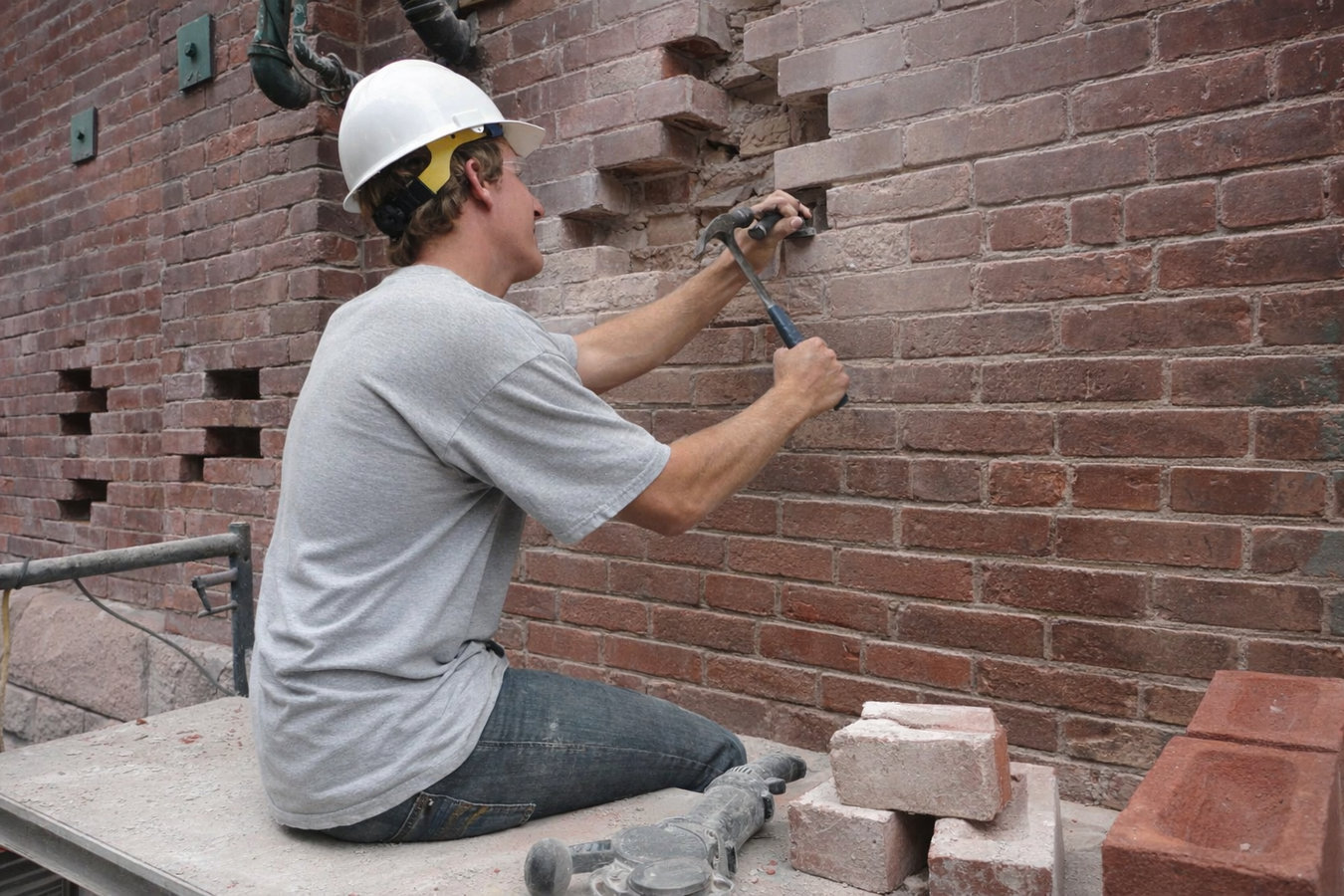
Cracked bricks, crumbling mortar, and spalling surfaces get worse with every Gulf Coast storm that passes through. We repair what is broken, match what is there, and close the gaps that let water in.
Brick repair in Lake Charles covers everything from refreshing crumbling mortar joints to replacing individual bricks that have cracked, spalled, or been damaged by storm impact, and most residential jobs wrap up in one to three days.
Most brick repair jobs focus on the mortar joints first - the thin lines of material between the bricks that hold the wall together and keep water out. But when bricks themselves have started to chip, flake, or crack, the repair goes further: removing the damaged units, setting new ones that match as closely as possible, and repointing the surrounding joints. In Lake Charles, where annual rainfall runs close to 58 inches and many homes are 40 to 60 years old, this combination of joint failure and brick damage is common - especially after back-to-back storm seasons.
Sometimes what looks like a mortar problem is actually a sign of movement below - stair-step cracks along the joints can indicate soil shifting under the foundation. When we see that pattern, we will tell you honestly whether the scope needs to include something like tuckpointing alone or whether there is a deeper structural issue to address first.
Those chalky white marks are called efflorescence - they mean water is moving through your brick wall and leaving mineral deposits on the surface. In Lake Charles's wet climate, this is a common early warning sign that your mortar joints are no longer keeping moisture out the way they should.
Run your finger along the mortar lines on an exterior wall. If the material feels soft, crumbles easily, or has pulled away from the brick edges, it has lost its bond. This is especially common on Lake Charles homes that are 40 or more years old and have never had their mortar refreshed.
If you have cracks that were not there before a hurricane or tropical storm passed through, do not assume they are cosmetic. Wind loading and ground movement during major storms can stress brick walls in ways that are not obvious from the outside, and those cracks will grow through each subsequent rainy season.
When the surface of a brick starts to flake off in layers or chunks, the brick itself has been damaged - usually by repeated cycles of moisture getting in and then drying out. A damaged brick face absorbs water faster than an intact one, which speeds up further deterioration and increases the risk of water reaching your interior walls.
Our brick repair work ranges from mortar joint refreshing on a single wall section to replacing multiple damaged bricks on a chimney or exterior facade. We start by assessing exactly what has failed - joints only, bricks only, or both - because the approach and cost differ significantly. For jobs that are limited to mortar joint failure, we often carry out full tuckpointing as the primary scope, which means grinding out the old mortar to a consistent depth and repacking with a matched replacement. When individual bricks have cracked, spalled, or separated from the wall, we remove them carefully, set replacement units, and repoint the surrounding joints to blend the repair into the existing wall.
We also apply Brick Industry Association best practices for mortar matching, which matters most on older homes where using the wrong hardness damages the brick faces rather than protecting them. For homes where brick repair is part of a broader exterior project, we can coordinate with FEMA building science guidance for storm-damaged structures to make sure the repair is done to a standard that holds up to Gulf Coast conditions.
Ideal when the bricks themselves are intact but the mortar lines have crumbled, recessed, or separated - the most common form of brick repair in this climate.
Suited for walls where individual bricks have cracked, spalled, or been damaged by impact and need to be removed and replaced with matched units.
For homes that have not been fully assessed since a hurricane or tropical storm, addressing both visible and hidden damage before the next storm season.
Chimneys take more weather exposure than any other part of the structure - this targeted scope addresses the brick and mortar where deterioration shows up first.
Lake Charles averages close to 58 inches of rain per year - well above the national average - and the combination of heat and moisture accelerates mortar deterioration faster than in drier climates. What might take 20 years to become a problem elsewhere can show up in 10 to 12 years here, so homes in this area need their brick inspected more frequently than homeowners typically expect. Many of the mid-century homes in established neighborhoods like Broadmoor were built with brick veneer over wood frames, and those weep holes and mortar joints are the main line of defense keeping moisture from reaching the wood behind the brick. The 2020 hurricane season added urgency to that picture - homes that took storm damage and have not had a full masonry inspection since may have more going on behind the wall than is visible from the outside.
We work throughout southwest Louisiana, including Vinton and Sulphur. Clay-heavy soils across the region also contribute to brick problems - the soil swells and shrinks with moisture cycles, which puts ongoing stress on walls from below and can open mortar joints even after a recent repair. A thorough assessment looks at whether soil movement is part of the picture before we patch anything.
We respond within 1 business day. We ask where the damage is and roughly how large the affected area is, then schedule a free on-site visit - because brick repair is one of those jobs where a photo rarely tells the full story.
We walk the exterior, look closely at the damaged areas, and check whether the problem goes deeper than the surface. You receive a written estimate that breaks down what work will be done and what it will cost - not just a single number with no explanation.
Once you approve the scope, we put you on the schedule. In Lake Charles right now, lead times can run a few weeks given ongoing demand in the area. We match the mortar before the crew arrives - you will not see a different color or texture that stands out from the existing wall.
The crew removes damaged mortar or bricks, sets the replacement, and tools the joints to match the original profile. Before leaving, we walk the repaired section with you and explain the curing period - fresh mortar needs 24 to 48 hours before it gets wet.
Get a free written estimate on your brick repair. We respond within 1 business day, assess the full picture before recommending a scope, and give you a straight answer on what your home actually needs.
(337) 549-5482You receive a written estimate that spells out what areas will be addressed, what mortar type will be used, and what any replacement bricks will be matched to. No vague line items, no scope surprises after the crew shows up.
We have assessed and repaired brick structures across southwest Louisiana through multiple storm seasons. We know what hurricane-force wind-driven rain does to mortar joints and where to look for damage that is not obvious from the sidewalk.
We check your existing mortar hardness before mixing a replacement. On older Lake Charles homes, using a mix that is too hard causes the brick faces themselves to crack over time - the opposite of a repair. This step is not optional for us.
Louisiana requires masonry contractors to hold a current state license before taking on structural work. Our credentials are verifiable through the Louisiana State Licensing Board for Contractors - protecting you if anything goes wrong.
In Lake Charles, where nearly five feet of rain falls every year and storm seasons are a fact of life, solid brick starts with the mortar. We do the assessment, match the material, and stand behind the work when we leave.
Upgrade your driveway surface with durable pavers that handle Gulf Coast heat and heavy rains without cracking or shifting.
Learn MoreWhen only the mortar joints have failed and the bricks are still intact, tuckpointing removes and replaces just the deteriorated mortar for a lasting seal.
Learn MoreEvery rainy season without a repair means more water behind your walls and a bigger bill down the road. Call us or submit a request today - we respond within 1 business day.